Reviewing the Pencil Holder: A Designer’s Take
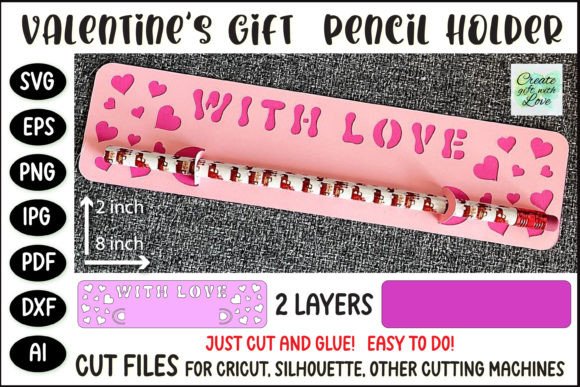
As an embroidery designer who has spent years digitizing patterns and testing them on everything from stiff denim to delicate baby knits, I approach every new file with a critical eye. We often get caught up in the visual appeal of a thumbnail image, but the real test is how a design behaves under the needle. Recently, I evaluated a project labeled as Pencil Holder, which is described as an "I love You. Valentine SVG Cutting File for Cricut, Silhouette." At first glance, the categorization seemed disjointed—listing it under Shapes and as a 3D SVG while referencing cutting machines rather than embroidery hoops. However, for those of us in the craft business, versatility is key. Whether you are creating a physical holder or using the graphic for embroidered apparel, understanding the design’s structural integrity is crucial before you commit to stitching.
First Impressions and Visual Personality
The core of this design revolves around the phrase "I love You," positioned within or alongside a pencil holder motif. The mood is undeniably sweet, targeting the Valentine’s Day market, classroom exchanges, and family-centric gifting. From a layout perspective, the simplicity is its greatest strength. Complex, overly detailed designs often fail when scaled down for small items like pencil holders or baby clothes. This design appears to prioritize clarity, which is essential for readability. The visual personality is clean and modern, avoiding the clutter that often plagues holiday-themed graphics. For an embroidery project, this suggests that the lines are likely bold enough to hold up well, provided the digitization matches the vector quality of the SVG source.
When I look at a design intended for both cutting and potentially embroidery, I am immediately checking for closed shapes and smooth curves. Jagged edges in a vector file translate to poor stitch paths. If this Pencil Holder design maintains its geometric integrity when converted or used as a reference for embroidery, it offers a professional finish that customers appreciate. It feels less like a generic clipart insertion and more like a intentional graphic element, which elevates the perceived value of the finished product.
Real-World Application in Embroidery Projects
Let’s move beyond theory and discuss where this design actually shines in a real-world scenario. Imagine you are preparing a custom order for a local elementary school teacher who wants personalized gifts for her students. She needs something cute, durable, and quick to produce. Here, the Pencil Holder concept translates beautifully into a tote bag design or a sweatshirt embroidery piece. By placing the "I love You" message prominently, you create an emotional connection that goes beyond a simple utility item.
For Etsy sellers and small shop owners, this type of design is a staple for seasonal collections. It fits seamlessly into categories like holiday embroidery and personalized gift items. I can envision this stitched onto canvas tote bags using a combination of fill stitch for the pencil body and satin stitch for the text. The contrast between the textured fill and the smooth satin creates visual interest without overwhelming the viewer. Additionally, because the theme is universal, it appeals to a broad demographic, from parents buying for children to partners exchanging Valentine tokens.
If you are working with custom apparel, such as hoodies or caps, the design’s simplicity allows it to sit comfortably on curved surfaces. A complex, wide design would distort on a cap, but a compact, vertical orientation like a pencil holder works well. It becomes a subtle yet meaningful accent, perfect for commercial embroidery runs where consistency and speed are paramount.
Navigating Fabric and Technical Constraints
While the design is charming, practical application requires caution. Not every fabric behaves the same way. If you are stitching this on textured fabrics like terry cloth towels or fuzzy fleece, fine details may get lost. In such cases, increasing the stitch density slightly or opting for thicker thread can help maintain visibility. Conversely, on thin fabric or stretchy materials like jersey knits, heavy stitching can cause puckering. This is where your choice of stabilizer becomes non-negotiable. A cut-away stabilizer is often safer for garments that will be washed frequently, ensuring the design remains flat and intact over time.
Another consideration is the hoop size. If you are attempting to stitch this on a small embroidered patch or a narrow strap, you must verify the dimensions. Tiny lettering, such as the words "I love You," can become illegible if scaled down too far. I always recommend testing the design on scrap fabric first. Check the smallest elements to ensure they do not turn into blobs of thread. If the design includes intricate corners or sharp angles, monitor your machine’s performance to prevent thread breaks or needle deflection.
Color choice also plays a pivotal role. On dark fabric, light thread colors pop effectively, but you must ensure there is enough contrast between the different elements of the design. If the pencil and the text are similar shades, they may blend together, reducing the impact. Use high-contrast combinations to guide the eye and enhance the visual appeal of the finished product.
Enhancing Brand Value and Customer Trust
For creative entrepreneurs and digital product sellers, the quality of your design assets directly influences buyer engagement. A clean, well-executed Pencil Holder design signals professionalism. When customers see crisp lines and balanced spacing, they trust the maker’s skill. This trust translates into higher perceived value, allowing you to price your handmade product competitively. Whether you are selling the digital embroidery file itself or the physical item, presentation matters.
Creating printable mockups that showcase the design on various items—such as baby embroidery onesies, aprons, or pillow covers—helps buyers visualize the end result. This reduces hesitation and increases conversion rates. Furthermore, consistent use of such themed designs helps build brand recognition. If your shop is known for cute, family-friendly design assets, this piece fits perfectly into your portfolio, reinforcing your niche.
Practical Notes for Designers and Makers
Before you launch into production, take a moment to review the technical specifics. Since the source description mentions SVG files for cutting machines, ensure you have the correct embroidery file format for your machine, such as PES, DST, or EXP. Do not assume compatibility. Verify the license terms explicitly. Can you use this for commercial embroidery? Are there restrictions on the number of finished items you can sell? Clarifying these points protects your business from legal issues.
Test the design in black and white mockups to evaluate contrast without the distraction of color. This reveals any weaknesses in the digitizing path. Check the stitch density settings; if they are too high, the fabric may pucker; if too low, the background fabric might show through. Finally, consider the context. Is this for a boutique branding effort or a casual craft fair product? Adjust your material choices accordingly. High-end linen demands precise stitching, while cotton canvas is more forgiving.
In conclusion, the Pencil Holder design offers a versatile foundation for Valentine’s and everyday projects. Its strength lies in its simplicity and emotional resonance. By paying attention to fabric selection, stabilizer use, and stitch quality, you can transform this digital asset into a tangible item that delights customers and strengthens your brand. Whether you are an experienced apparel decorator or a hobbyist exploring new Shapes, this design invites creativity while demanding technical precision. Treat it with care, and it will serve your craft business well.